

Call us now
08045804854
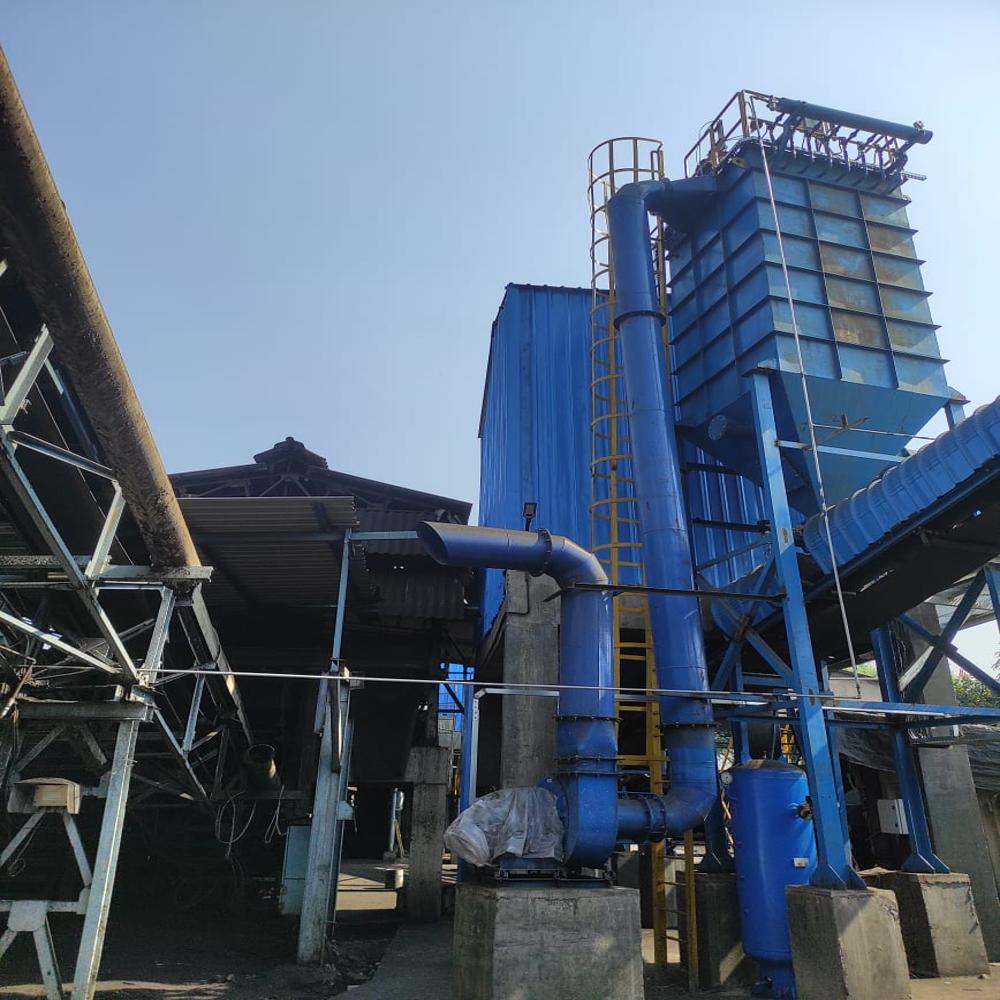
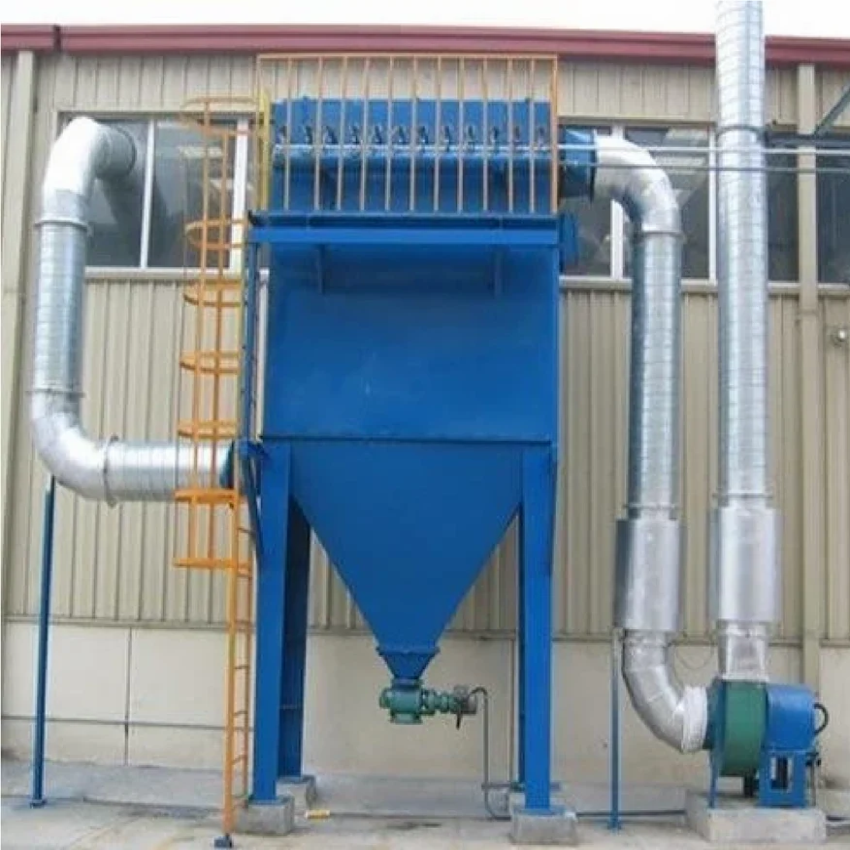
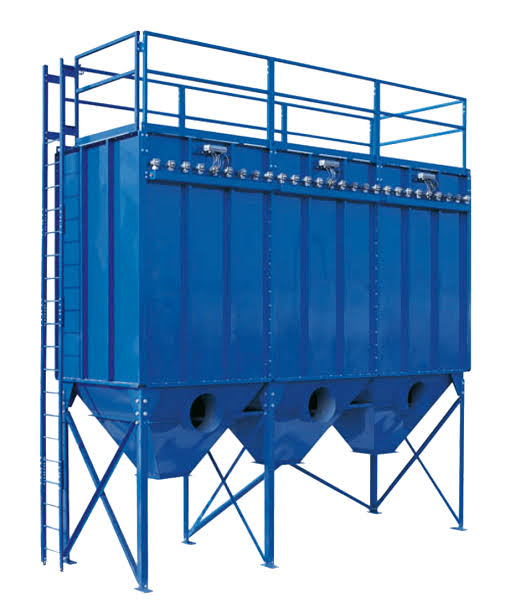
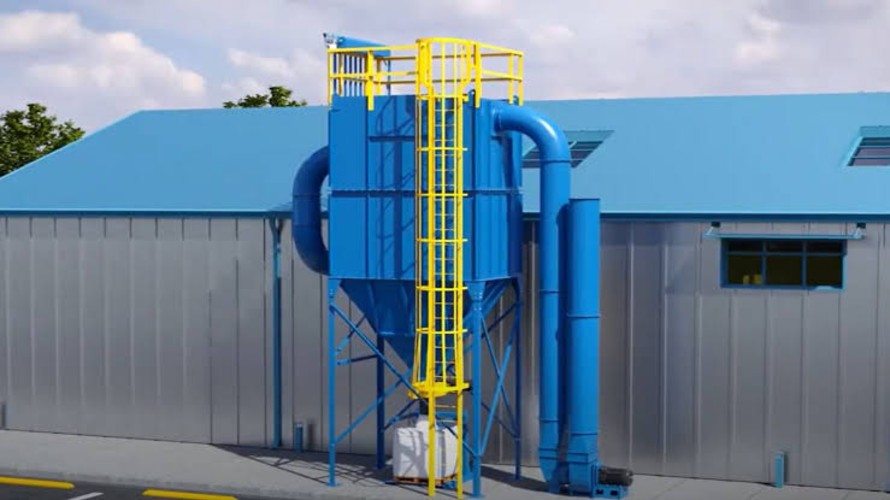
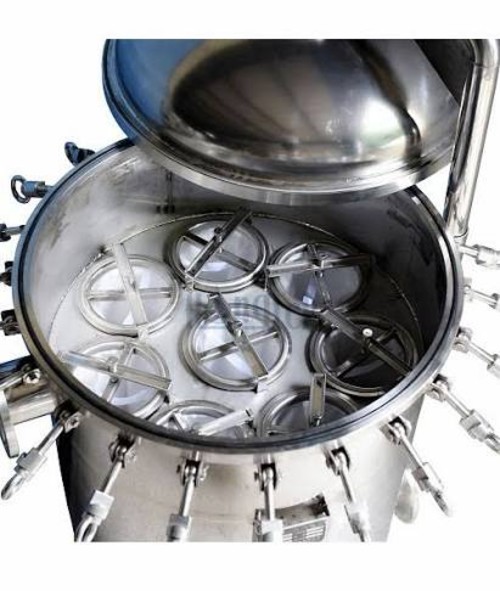
Dust-laden gas or air enters the baghouse through hoppers and is directed into the baghouse compartment. The gas is drawn through the bags, either on the inside or the outside depending on cleaning method, and a layer of dust accumulates on the filter media surface until air can no longer move through it. When a sufficient pressure drop (P) occurs, the cleaning process begins. Cleaning can take place while the baghouse is online (filtering) or is offline (in isolation). When the compartment is clean, normal filtering resumes Most baghouses use long, cylindrical bags (or tubes) made of woven or felted fabric as a filter medium. For applications where there is relatively low dust loading and gas temperatures are 250F (121C) or less, pleated, nonwoven cartridges are sometimes used as filtering media instead of bags.
In reverse pulse-jet baghouses, individual bags are supported by a metal cage (filter cage), which is fastened onto a cell plate at the top of the baghouse. Dirty gas enters from the bottom of the baghouse and flows from outside to inside the bags. The metal cage prevents collapse of the bag. Bags are cleaned by a short burst of compressed air injected through a common manifold over a row of bags. The compressed air is accelerated by a venturi nozzle mounted at the reverse-jet baghouse top of the bag. Since the duration of the compressed-air burst is short (about 0.1 seconds), it acts as a rapidly moving air bubble, traveling through the entire length of the bag and causing the bag surfaces to flex. This flexing of the bags breaks the dust cake, and the dislodged dust falls into a storage hopper below. Reverse pulse-jet dust collectors can be operated continuously and cleaned without interruption of flow because the burst of compressed air is very small compared with the total volume of dusty air through the collector.

Price:


 Send Inquiry

 Send Inquiry
 Send Inquiry
 Send SMS